Introduction
Social media has become an important part of modern business marketing. Platforms such as Instagram, Facebook, YouTube and LinkedIn help businesses connect with customers, promote products, build brand awareness and increase sales. However, simply creating social media accounts and posting content does not guarantee success.
Many beginners make common social media marketing mistakes without realising how much they affect their online growth. Some businesses post without a plan, target the wrong audience, ignore customer comments or focus only on selling products. These mistakes can waste time, money and marketing opportunities.
Social media marketing requires proper planning, creative content, audience understanding and regular performance analysis. WhetheSr you are a beginner, freelancer or small business owner, understanding these mistakes can help you develop a stronger marketing strategy.
In this guide, we will discuss 15 common social media marketing mistakes and explain how you can avoid them to build a successful online presence.
Social media marketing is the process of promoting a business, product, service or personal brand through social networking platforms. It involves creating and sharing content, communicating with followers, running advertisements and analysing performance.
Whether you are a beginner, freelancer or small business owner, learning from an experienced best digital marketer in Thrissur can help you understand effective social media strategies. With proper planning, audience research and quality content, you can improve your online presence and achieve better marketing results.
Popular social media marketing platforms include:
- Instagram: Useful for visual content, Reels, Stories and product promotion.
- Facebook: Helps businesses connect with communities, share updates and run advertisements.
- YouTube: Supports video marketing, tutorials, product reviews and educational content.
- LinkedIn: Helps professionals and businesses build networks, share industry knowledge and generate business leads.
The main purpose of social media marketing is not only to gain followers. It is also about building relationships, earning trust and achieving business goals.
Why Is Social Media Marketing Important for Businesses?
Social media gives businesses an opportunity to reach potential customers and communicate with them directly. Even small businesses can use these platforms to introduce their products and services without depending entirely on traditional advertising.
Some important benefits include:
- Brand awareness: Regular, useful content helps people become familiar with your business.
- Customer engagement: Comments, messages and discussions create opportunities to understand customer needs.
- Website traffic: Social media posts can direct interested users to your website.
- Lead generation: Businesses can attract potential customers through useful content and advertising campaigns.
- Brand trust: Helpful information, customer feedback and genuine communication can strengthen credibility.
- Performance measurement: Platform analytics help marketers understand which content performs well.
However, businesses need a clear strategy to achieve these benefits. Avoiding common mistakes is an important first step.
5. Ignoring C15 Common Social Media Marketing Mistakes Beginners Should Avoid
1. Not Setting Clear Marketing Goals
One of the biggest mistakes beginners make is posting content without deciding what they want to achieve. Without clear goals, it becomes difficult to measure success.
For example, a clothing store may want to increase product sales, while a new digital marketing agency may want to generate enquiries. Both businesses require different content strategies.
How to avoid it:
Set specific goals before publishing content. Your objectives could include increasing brand awareness, generating leads, driving website traffic or improving customer engagement. Select measurements that match each goal.
2. Not Understanding the Target Audience
Creating content without understanding your audience can reduce its effectiveness. A marketing message designed for teenagers may not attract working professionals or business owners.
You should understand who your potential customers are, what they need and what problems they want to solve.
How to avoid it:
Research your audience by considering:
- Interests and hobbies.
- Age group and location.
- Customer problems and needs.
- Buying behaviour.
- Preferred social media platforms.
For example, a skincare brand may create educational skincare videos for people interested in beauty and personal care.
3. Using Every Social Media Platform
Some beginners believe that their business must be active on every social media platform. This can create unnecessary pressure and reduce the quality of their content.
Every platform has different audiences and content formats. LinkedIn is useful for professional communication, while Instagram is popular for visual storytelling.
How to avoid it:
Choose two or three platforms that match your target audience and business goals. Understand how people use each platform and create suitable content for them. Expand to other platforms when you have enough time and resources.
4. Posting Only Promotional Content
Another common social media marketing mistake is constantly advertising products and services. Followers may lose interest when every post contains a sales message.
People also follow businesses to learn something, discover ideas and enjoy useful content.
How to avoid it:
Create a healthy content mix. Share educational posts, entertaining content, product information, customer stories and promotional offers.
For example, a perfume business can publish fragrance-care tips, product demonstrations, customer reviews and special offers instead of posting only product ontent Planning
Posting randomly without a content plan can make a business look unorganised. You may forget important events, repeat the same ideas or struggle to publish regularly.
A content calendar helps you prepare posts in advance and maintain a clear direction.
How to avoid it:
Create a weekly or monthly content calendar. Decide the topic, platform, format and publishing date for every post.
A simple weekly plan could include:
- Monday: Educational post.
- Tuesday: Product or service showcase.
- Wednesday: Instagram Reel.
- Thursday: Customer feedback.
- Friday: Promotional content.
- Saturday: Behind-the-scenes content.
- Sunday: Stories and audience interaction.
Adjust this schedule according to your audience and available resources.
6. Being Inconsistent With Posting
Consistency is important for building familiarity and maintaining communication with your audience. Posting several times in one week and then disappearing for a month can make it difficult to maintain an active community.
However, consistency does not mean publishing poor-quality content every day.
How to avoid it:
Choose a realistic publishing schedule that you can maintain. Prepare content in batches, use scheduling tools and review your calendar every week.
Focus on regular, useful content rather than posting simply to increase the number of posts.
7. Following Every Social Media Trend
Trends can help content reach new audiences, but following every viral trend is not a good marketing strategy. Some trends may not match your business identity or target audience.
For example, a professional financial consultancy may not benefit from copying every entertainment trend on Instagram.
How to avoid it:
Before participating in a trend, ask yourself:
- Does this trend suit my business?
- Will my target audience understand it?
- Does it support my marketing objectives?
- Can I create something original with it?
Use relevant trends creatively while maintaining your brand identity.
8. Publishing the Same Content on Every Platform
Copying exactly the same content across Instagram, Facebook, LinkedIn and YouTube is a common mistake. Each platform has different audiences, formats and communication styles.
A short Instagram Reel may not work as a detailed LinkedIn post. Similarly, a YouTube tutorial may require more explanation than an Instagram Story.
How to avoid it:
Adapt your content to each platform.
For example:
- Instagram: Reels, Stories and attractive visual posts.
- Facebook: Community updates, discussions and business information.
- YouTube: Tutorials, product demonstrations and longer videos.
- LinkedIn: Professional insights, industry knowledge and business updates.
One content idea can be reused, but the presentation should suit the platform.
9. Ignoring Content Quality
Poor-quality images, unclear videos, spelling errors and weak captions can create a negative impression of your business.
You do not need expensive equipment to create good content, but your posts should be clear, relevant and easy to understand.
How to avoid it:
Use good lighting, readable fonts, clear images and simple language. Check spelling before publishing. Make the main message easy to understand and include a useful call to action when appropriate.
10. Using Too Many Hashtags and Keywords
Adding large numbers of unrelated hashtags or repeating keywords unnecessarily does not automatically improve reach. Irrelevant hashtags can make your content look unprofessional and confuse its topic.
How to avoid it:
Use relevant hashtags that describe your content, product or industry. Include important keywords naturally in captions, descriptions and profile information.
For example, a digital marketing educational post could use relevant hashtags such as:
- #DigitalMarketing
- #SocialMediaMarketing
- #ContentMarketing
- #MarketingTips
Choose relevance over quantity.
11. Ignoring Comments and Direct Messages
Social media is a communication channel, not just a place to publish advertisements. When businesses ignore customer comments and messages, they miss opportunities to build relationships.
Imagine a customer asking about the price of a product and receiving no reply. That customer may simply approach another business.
How to avoid it:
Check your notifications regularly and respond politely to questions, feedback and complaints. Answer common questions clearly and direct customers to the right information.
Good communication can help customers feel valued and encourage long-term relationships.
12. Not Checking Social Media Analytics
Posting content without checking its performance is another important mistake. Without analytics, you may not understand which posts attract attention or whether your marketing activities support your goals.
How to avoid it:
Review the available insights on your social media platforms. Depending on your goals, monitor:
- Reach and impressions.
- Likes, comments and shares.
- Profile visits.
- Website clicks.
- Video views and watch time.
- Leads and conversions.
For example, if your goal is website traffic, pay attention to link clicks rather than judging success only by likes.
13. Not Testing Different Content Formats
Some businesses use only images or text posts and never experiment with other formats. This limits their ability to discover what their audience prefers.
Different content formats can communicate the same message in different ways.
How to avoid it:
Experiment with Reels, Stories, carousels, short videos, tutorials, infographics and live sessions. Compare their performance over time and identify which formats help achieve your objectives.
Do not assume that one format will work equally well for every business.
14. Having an Unprofessional or Incomplete Profile
Your social media profile is often one of the first places potential customers visit. An unclear profile picture, missing contact information or confusing biography can make your business look unreliable.
How to avoid it:
Complete your profile with:
- A recognisable logo or professional profile picture.
- A clear business description.
- Relevant contact details.
- Website link, where available.
- Location and business information.
- Consistent colours and brand identity.
Make it easy for visitors to understand what your business offers and how they can contact you.
15. Buying Followers and Fake Engagement
Buying followers may appear to increase popularity quickly, but it does not create a genuine customer community. Fake accounts are unlikely to become customers or meaningfully interact with your content.
A large follower count does not automatically mean that a business has a successful marketing strategy.
How to avoid it:
Focus on attracting real people through useful content, meaningful conversations, relevant collaborations and targeted promotions. Measure genuine engagement, enquiries and conversions rather than focusing only on follower numbers.
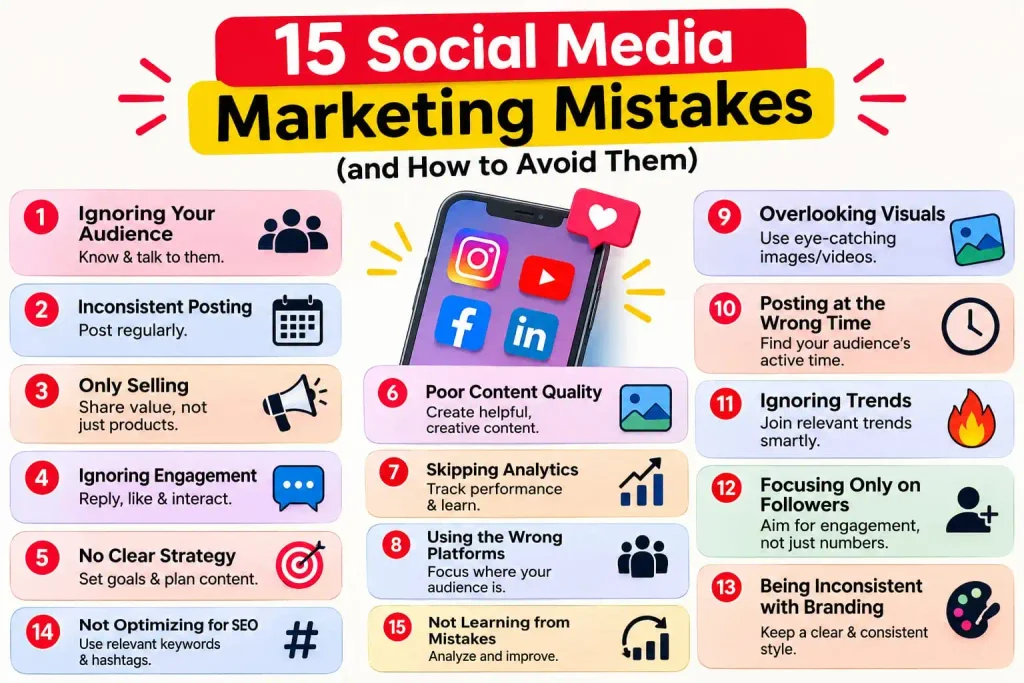
How to Avoid Social Media Marketing Mistakes
Avoiding social media marketing mistakes becomes easier when you follow a simple and organised process.
1. Create a marketing strategy: Define your business objectives, target audience, platforms and content approach before publishing.
2. Research your competitors: Observe how similar businesses communicate with their audience. Look for content ideas, but do not copy their work.
3. Prepare a content calendar: Plan your topics and publishing schedule in advance to maintain consistency.
4. Focus on valuable content: Share information that educates, entertains or solves a problem for your audience.
5. Engage with followers: Reply to comments, answer questions and communicate professionally through direct messages.
6. Measure your performance: Review analytics regularly and compare results with your marketing goals.
7. Improve your strategy: Use what you learn from your results to update your content and marketing activities.
Remember that social media marketing is an ongoing process. Your strategy should develop as your business and audience change.
Best Social Media Marketing Practices for Beginners
Beginners do not need complicated marketing techniques to build a strong online presence. Start with simple practices and improve them over time.
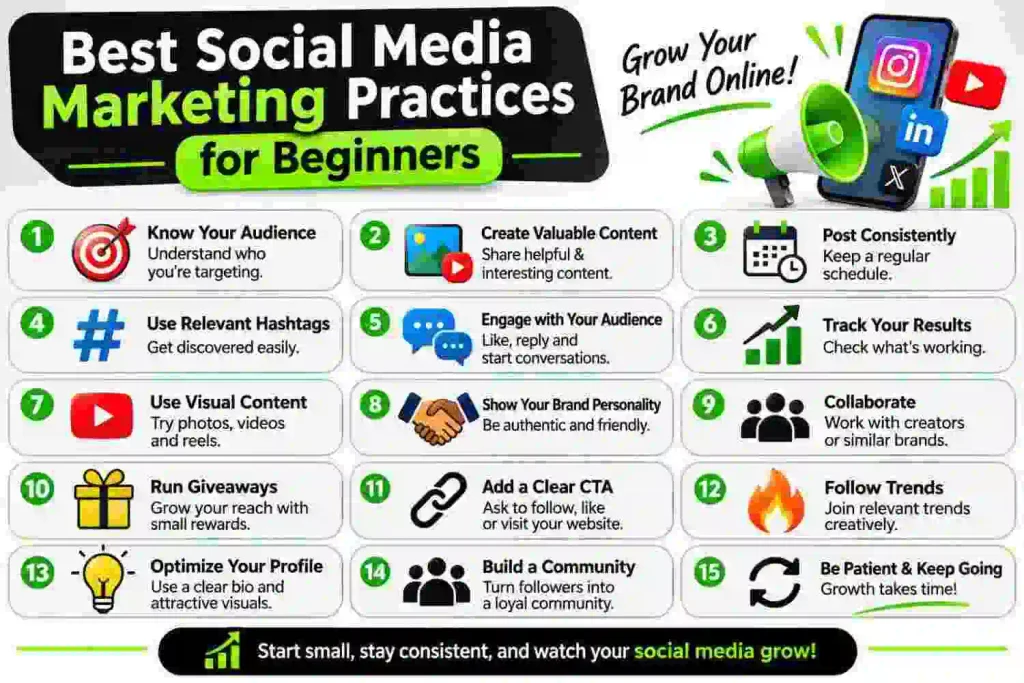
Here are some useful social media marketing tips:
- Understand your audience before creating content.
- Maintain a consistent brand identity.
- Use clear images and engaging video content.
- Write simple captions with a clear message.
- Share useful and relevant information.
- Encourage genuine conversations.
- Use analytics to understand performance.
- Keep your business profile updated.
- Test different content formats.
- Learn about platform updates and available creator tools.
Instagram also provides a Best Practices section within its professional dashboard, offering guidance on content creation, engagement, reach and account performance.
Conclusion
Social media marketing can help businesses increase brand awareness, connect with customers and promote their products and services. However, success requires more than simply posting content regularly.
The 15 social media marketing mistakes discussed in this article show why planning, audience research, content quality, engagement and performance analysis are important. Avoiding these mistakes can help beginners build a more organised and effective social media marketing strategy.
Start by setting clear goals, choosing the right platforms and understanding your audience. Create useful content, communicate with followers and review your results regularly.
You do not need to become an expert overnight. Learn from your mistakes, improve your strategy and stay consistent. Small improvements can help you develop a stronger online presence over time.
Frequently Asked Questions (FAQs)
1. What are the most common social media marketing mistakes?
Common mistakes include not setting clear goals, targeting the wrong audience, posting inconsistently, ignoring comments, sharing only promotional content and failing to analyse performance.
2. How can beginners improve their social media marketing?
Beginners can improve by understanding their audience, choosing suitable platforms, creating a content calendar, publishing useful content and checking analytics regularly.
3. Why is a content calendar important for social media marketing?
A content calendar helps businesses organise topics, plan publishing dates, maintain consistency and avoid last-minute content creation.
4. How often should a business post on social media?
There is no single posting frequency that works for every business. Choose a realistic schedule based on your audience, platform and resources, then review performance to find what works.
5. Is social media marketing important for small businesses?
Yes. Social media can help small businesses introduce their brand, communicate with potential customers, share useful information and generate enquiries through organic content and paid advertising.